

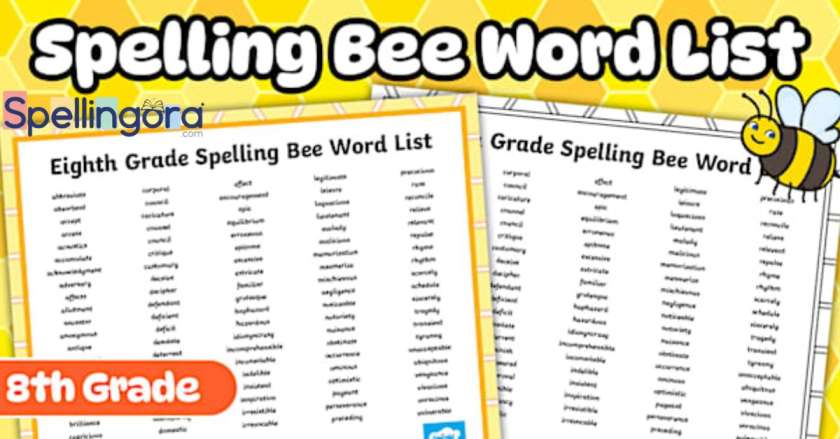
Getting ready for a Grade 8 Spelling Bee Words takes regular practice and a strong understanding of challenging words. This list of 100 spelling bee words is designed to help students improve spelling, pronunciation, vocabulary, and confidence. Practice each word carefully, learn its meaning, and review tricky spellings until they become easier to remember.
Grade 8 Spelling Bee Word List (100 words)
This Grade 8 spelling bee word list includes 100 carefully selected words to help students build stronger spelling skills and expand their vocabulary. The words range from commonly used terms to more challenging spellings, giving students useful practice for classroom activities, spelling tests, and competitions. Regular practice with pronunciation, word meanings, and correct letter patterns can help Grade 8 students become faster, more accurate, and more confident spellers.
You can also read: Australian Year 3 Spelling Words
Grade 8 Spelling Bee Words
These Grade 8 spelling bee words offer a helpful mix of familiar and challenging terms to improve spelling, vocabulary, and confidence. Practice each word regularly and pay attention to pronunciation and tricky letter patterns.
Championship-Level Words
- Accommodate
- Bureaucracy
- Conscientious
- Deteriorate
- Entrepreneur
- Exaggeration
- Inconvenience
- Magnificent
- Miscellaneous
- Perseverance
- Phenomenon
- Procrastinate
- Questionnaire
- Renaissance
- Sophisticated
- Unprecedented
- Vocabulary
- Xenophobia
- Zealous
- Metamorphosis
Deep Greek & Latin Origins
- Amphibious
- Anachronism
- Anthropological
- Circumference
- Contradiction
- Democracy
- Extraordinary
- Geography
- Hypothesis
- Incompatible
- Magnanimous
- Meticulous
- Omnipotent
- Philosophical
- Pneumonia
- Subterranean
- Thermometer
- Unilateral
- Vindication
- Zoological
- Etymology
Advanced Academic & Scientific Vocabulary
- Biodiversity
- Circumstantial
- Correlation
- Ecosystem
- Equilibrium
- Hypothetical
- Inflammation
- Laboratory
- Microscopic
- Observation
- Photosynthesis
- Precipitation
- Proportional
- Respiration
- Sedimentary
- Substitution
- Symmetrical
- Technological
- Theoretical
- Transformation
- Atmospheric
Words from Uncommon Language Families
- Algebra
- Avocado
- Chocolate
- Croissant
- Fjord
- Guru
- Kindergarten
- Kiosk
- Paprika
- Safari
- Shampoo
- Souvenir
- Tsunami
- Ukulele
- Yurt
- Bazaar
- Coyote
- Iguana
- Karaoke
- Mosquito
Competition Circuit Words
- Abstemious
- Belligerent
- Camaraderie
- Connoisseur
- Discrepancy
- Effervescent
- Idiosyncrasy
- Juxtaposition
- Labyrinthine
- Obsequious
- Ostentatious
- Paradoxical
- Quintessential
- Recalcitrant
- Sacrilegious
- Surreptitious
- Ubiquitous
- Vicissitude
- Worcestershire
- Zeitgeist
What to expect at a Grade 8 spelling bee
Championship-Level Vocabulary
Championship-level spelling words challenge students with complex patterns, unusual letter combinations, and advanced vocabulary. Learning these words builds accuracy, confidence, and the skills needed for high-level spelling competitions.
Etymology Is Non-Negotiable
Understanding where a word comes from can make difficult spellings easier to remember. Greek, Latin, French, German, and other language roots often reveal useful clues about pronunciation, spelling patterns, and word meaning.
Spelling Words You Have Never Seen
A strong spelling bee student must be ready for unfamiliar words. Practicing new and uncommon vocabulary helps you learn how to break words into sounds, recognize their origins, and make smart spelling choices even when the word is completely new.
FAQs
What are Grade 8 spelling bee words?
Grade 8 spelling bee words include challenging vocabulary that tests spelling, pronunciation, word roots, and knowledge of unusual letter patterns.
How can I prepare for a Grade 8 spelling bee?
Practice words regularly, say each word aloud, learn its meaning and origin, and review difficult words several times.
Why is etymology important in spelling bees?
Etymology can provide clues about how a word is spelled by showing its language of origin and common spelling patterns.
How many words should I practice each day?
Start with 10 to 20 words each day and gradually increase the number as your spelling and recall improve.
What should I do with unfamiliar spelling words?
Break the word into smaller parts, listen carefully to its pronunciation, identify possible roots, and write it several times.

Jack is an English language writer and grammar enthusiast with a passion for making learning simple and practical. He creates clear, easy-to-understand content on grammar, spelling, vocabulary, punctuation, and writing skills, helping readers improve their English with confidence.